

For most of the first century of its existence, Jackson Square’s Pacific Street was San Francisco’s red-light district, a place for sailors, maritime workers, and anybody looking for a good time of drinking, dancing, and/or sex.

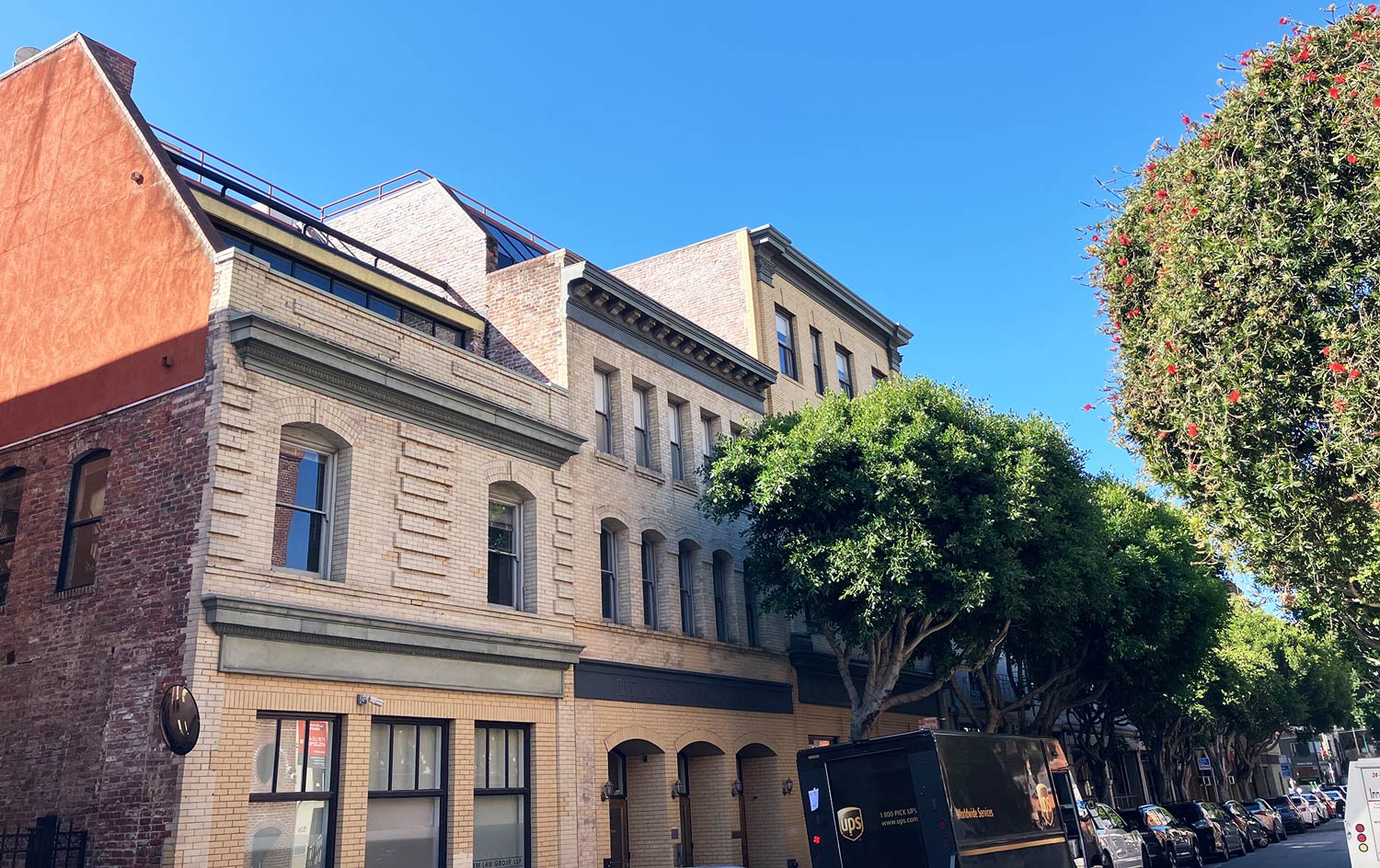
In 1855, Pacific Street was described as:
“…many dens of gross vice, which are patronized by Mexicans and Chileans. Their dance, drink and gambling houses are also the haunts of negroes and the vilest order of white men. In the quarrels which are constantly arising in such places many treacherous, thieving, and murderous deeds are committed.”
Vice districts are usually entangled with, and seen through, the lenses of societal prejudices and racist preconceptions. During San Francisco’s Gold Rush days halls of drinking, gambling, and prostitution operated almost adjacent to the city hall and Hall of Justice at Portsmouth Square. But it was the more ethnic avenues in Chinatown and today’s Jackson Square that were portrayed as the “blackguard quarters” of the city.

In the mid 1860s, the name “Barbary Coast” began being applied to the entertainment zone around Pacific and Kearny streets, a reference to the piratical reputation of ports on the north coast of Africa. The “Coast” was a source of hyperbolic sketches for decades:
“Like the malaria arising from a stagnant swamp and poisoning the air for miles around, does this stagnant pool of human immorality and crime spread its contamination vapors over the surrounding blocks on either side. […] Down Pacific Street, and in the narrow alleys and by-ways cutting into it, and also along Broadway for two or three blocks—right in the center of Barbary Coast—are the still lower dens of infamy. Here the women are shabbily clad, boisterous and almost insane with drink, and the men that are met leer at the passer-by with that idiotic expression begotten by long-continued drunkenness and debauchery.”
Even Benjamin E. Lloyd, author of the purple prose above in 1876, admitted that “The inventive genius of the reporters who must furnish so much thrilling copy […] has something to do with these blood-curdling scenes, and the Barbary Coast must have its excitement.”

Not that there weren’t thefts, fights, and other societal ills haunting the Barbary Coast, but Pacific Street was also simply the strip of cheap entertainment for those excluded from opera houses and “respectable” theaters: people of color, of rough jobs, and less disposable income.
In 1893, one of the periodic civic campaigns to shut down the bars and dance halls of the “Coast” pushed for laws around female employment and patronage with the implication that any women in these establishments were scammers or sex workers. The proprietor of “The Whale” at 904 Kearny Street pointed out the inequities of these “anti-dive” ordinances:
“All this comes from a lot of people who ain’t a bit better than we are in their way, and who don’t know anything about the business at all. […] Just suppose a deep-water ship gets in and the crew is paid off. What do those fellows do? Do they strike off for the better saloons? Not much. They are looking for music and women and they come right to this part of town. Somebody’s going to get their money, and the women might as well have it as anyone else.”
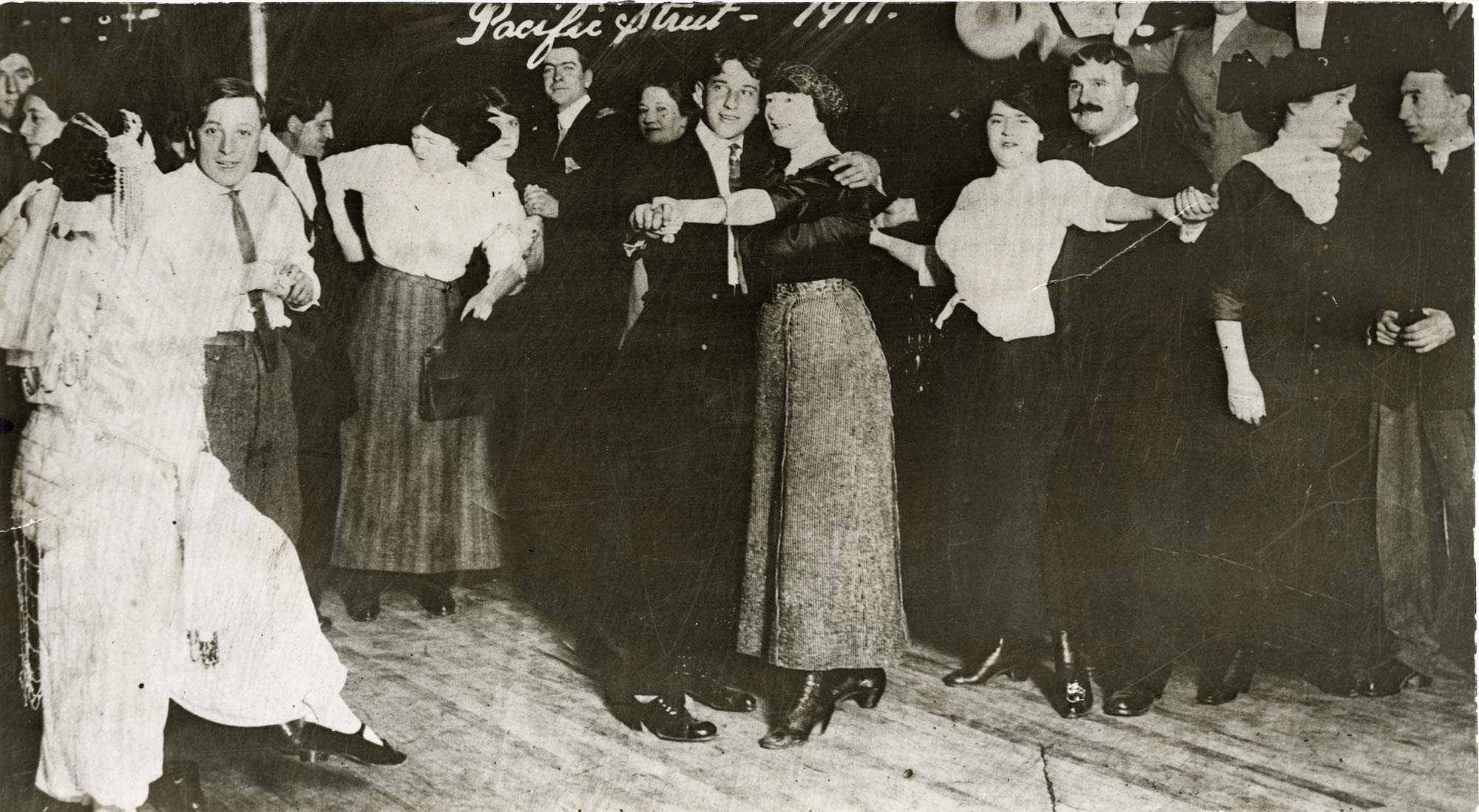
Pacific Street’s strip of dancehalls, bars, and small theaters between Kearny and Sansome streets survived every vice crackdown and morality campaign of the 19th century. Even after the devastation of the 1906 earthquake and fire, “Terrific Street” bounced back.
The 1910s brought a state Red Light Abatement Act to wipe out prostitution. Then, backed by crusading local newspapers and a focused police commission, San Francisco attempted to ban dancing at establishments attracting unescorted female patronage. Finally, the 1919 passage of the Volstead Act, making the manufacture, sale, and transport of alcohol illegal in the United States, essentially extinguished the old Barbary Coast.
But a somewhat sanitized version of “Terrific Street” would return two decades later, a story we will share later this week with other tales of the Barbary Coast in Jackson Square.
For our Heritage in the Neighborhoods: Jackson Square month, we are spotlighting the history and heritage of San Francisco’s first historic district.


